Black Week: the countdown has started and we have plenty of tips and takes from the industry
At Commerce Mind we have talked to a few industry figures, and every day this week we will share their thoughts and ours on Black Friday. Follow along as we bring you takes and tips from Alexandra Dornérus (Head of Business Development, Ellos), Anders Halvarsson (CEO, Scandinavian Photo), André Ihlar (Online Sales Manager, Lyko), Andrew Golrang (Product Director, Voyado), Johanna Linder, Charlotte Elmquist and Anders Urhed (Proflow), and Victor Melander (Head of Communications, Instabox).
The countdown to Friday has started, the day when Christmas shopping is to be destroyed, sales records are to be broken, or is total abstinence the theme? The ambivalence around Black Friday grows every year, but regardless of how you view the day, we are all hostages to having to deal with it. By the way, have you recovered from Singles Day?
A real veteran of the industry is Anders Halvarsson, CEO at Scandinavian Photo but at least as well known for being one of the founders of NetOnNet, and who has now brought the photo industry into new focus. A few years ago the site and campaigns struggled during Black Friday, but since the new site was launched in 2019 things have run well. The point is not to lose focus on making sure it can handle the peaks. Anders puts it simply and directly when it comes to preparations:
"You have to have the technology in order, so the site is tested for much higher traffic than normal, and have customer service well prepared…"
Customer service, yes. Prepare customer service properly. That is something easily forgotten, that you just staff up but do not think through the scenarios that can happen. If you need to reach customer service on Black Friday, you really do not want to be met with endless phone queues and completely new staff who know nothing. Although, that goes for every day, really. As Anders says:
"First and foremost, being ready with extra and trained staff. Part of that is having the ability to handle situations if things go wrong."
Both we at Commerce Mind and Anders think along the same lines as I hope most people do: clear guidelines for customer service, then technical on-call, monitoring checkpoints and prepared activities if the systems start alerting. Indexes to run, features on the site to turn off, and so on. It is about thinking through both what you can do before and during. We at Commerce Mind ourselves wonder whether you should be so over-prepared that you have a communication plan for if everything goes down, ready-made "we apologise" campaigns ready to push out when everything works again. Or is that too pessimistic? We actually think you should.
By the way, John Järpling at Commerce Mind's best tip when everything is burning is to take it easy, do not get worked up, and save the blame game for a few days later. Be solution-oriented, not angry. It helps in the long run.
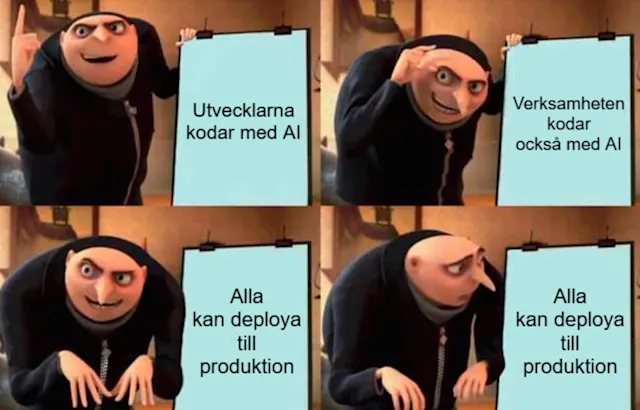
AI does not only make development faster, it moves the capability out into the whole organisation. Suddenly anyone can build and change things in the systems. It is enormously powerful, but combined with old ways of working it leads to either chaos or no effect at all. Here is how you lead the shift from tree-tender to forest ranger before entropy runs away from you.
Technical debt is more than a technical concept, it is a business-critical reality that affects everything from time-to-market to customer experience. In e-commerce, where every millisecond and every click counts, the choices you make in your technical platform can have far-reaching consequences. When quick fixes are prioritised over long-term durability, an invisible but growing debt is built up. It affects not only development speed and stability, but at worst can slow the company's ability to innovate and compete. To face the future the right way, technical debt has to be understood, quantified and managed as the strategic investment it actually is.
For Swedish retailers there are plenty of ways to meet this threat by building on what the Chinese giants cannot offer: strong local brand stories, product safety and sustainability as competitive advantages, and a presence that ties digital and physical commerce together. Temu has no stores. Yet.